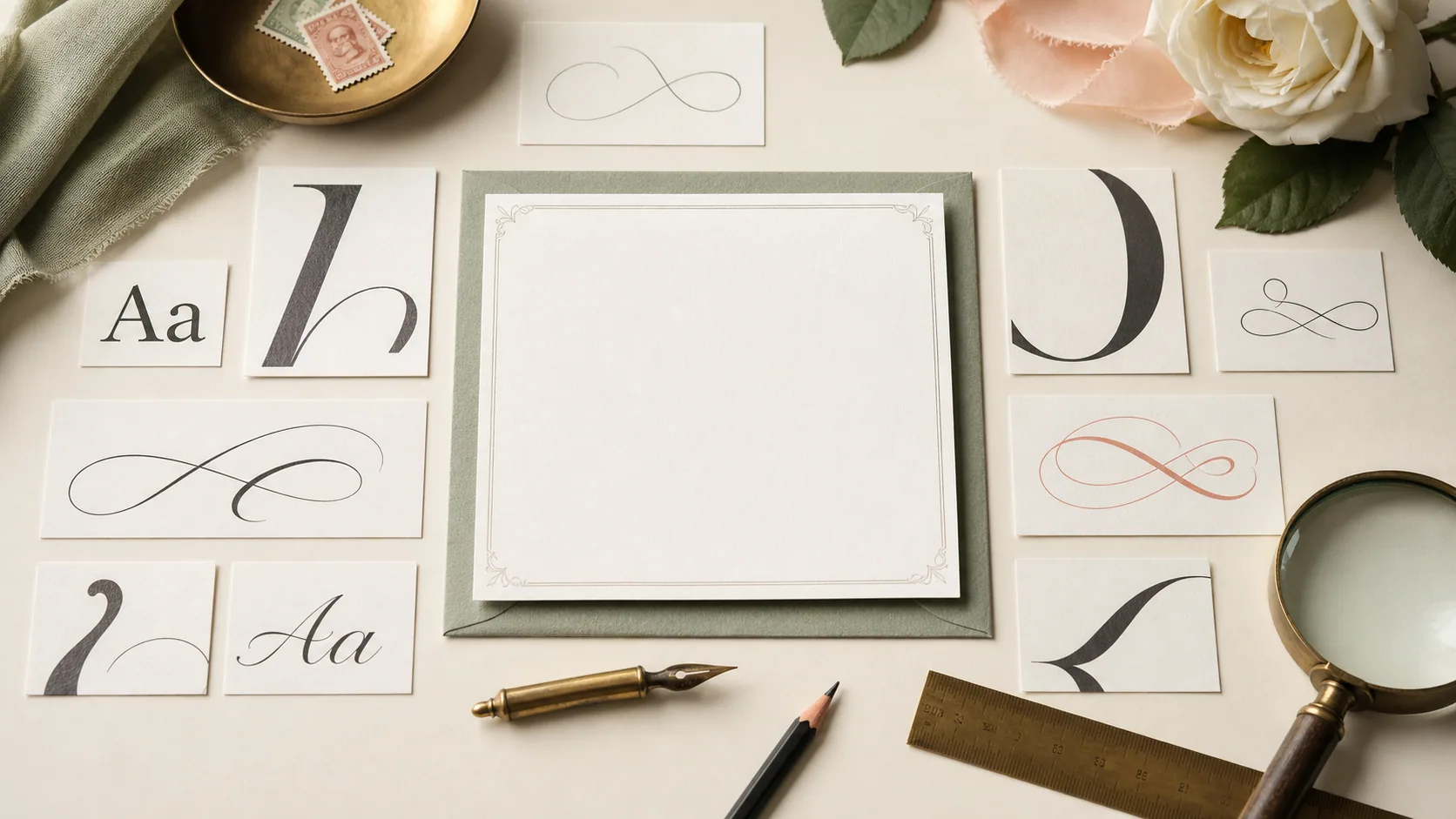
When designing wedding invitations, one often-overlooked but critical element is the font choice. The right typography can set the tone for your entire wedding, reinforcing the theme and giving guests a sense of the day's formality. This guide covers the best wedding invitation fonts, reliable pairings, and the font sizes that keep every important detail readable.
Want to test a pairing before you commit? Add your own names, date, and venue to our free wedding invitation font pairing preview, then open a matching template when the typography feels right.
Why Font Selection Matters for Wedding Invitations
Fonts do more than just display the details of your event---they communicate the mood, tone, and theme of your wedding. For instance, a classic serif font evokes elegance and tradition, while a whimsical script suggests a more casual, fun celebration. Your font choice can subtly hint at the level of formality, the venue's vibe, and even the type of attire guests should expect.
Matching Fonts to Your Wedding Style
-
Formal Weddings: For black-tie or traditional ceremonies, classic serif fonts like Times New Roman, Garamond, or Didot are perfect. They are timeless and exude sophistication.
-
Rustic or Bohemian Weddings: If your wedding is more rustic or laid-back, opt for fonts with a more organic feel. Handwritten or brush script fonts like Bickham Script or Amatic SC can complement a relaxed, outdoorsy vibe.
-
Modern Weddings: A minimalist, modern wedding calls for sleek, sans-serif fonts like Helvetica, Futura, or Montserrat. These fonts are clean, easy to read, and ideal for contemporary designs.
-
Whimsical or Playful Weddings: If you want your invitations to feel fun and casual, choose decorative or playful fonts like Pacifico or Lobster. These fonts convey a sense of joy and excitement, perfect for more informal celebrations.
Combining Fonts for Balance and Readability
A common design technique in wedding invitations is to use two or more fonts to create visual interest and hierarchy. However, it's important to strike the right balance. Overloading an invitation with too many fonts can make it look cluttered and hard to read.
How to Pair Fonts Effectively
-
Choose Complementary Styles: When pairing fonts, look for contrast. For example, pair a flowing script font with a more structured serif or sans-serif font. The script can be used for the couple's names, while the serif font is perfect for details like date, time, and location.
-
Limit to Two Fonts: To avoid confusion, stick to two complementary fonts. This helps maintain a clean, professional look while still allowing for variety.
-
Establish Hierarchy: Use different fonts or font sizes to establish a hierarchy of information. The couple's names should be the largest and most decorative element, followed by the event's essential details in a simpler, smaller font.
Choosing Font Size and Readability
While font style is important, readability should never be compromised. Guests should be able to read the invitation easily without squinting or struggling with overly elaborate designs.
What Size Font Should a Wedding Invitation Use?
For a standard 5 × 7 inch wedding invitation, use this practical starting point:
- Couple's names: 20–28 pt. Script fonts often need the upper end of this range because their strokes are more detailed.
- Invitation line or host names: 12–16 pt.
- Date, time, and venue: 11–14 pt. These details should be easy to scan at arm's length.
- RSVP, website, or dress code: 9–11 pt. Avoid going below 9 pt for printed text.
These are starting sizes, not rigid rules. A font with a large x-height can look bigger than another font at the same point size. Always print one copy at actual size and ask someone else to read the date, time, and venue without help. For digital invitations, preview the design on a phone before sending it.
Font Color Considerations
The color of your font should stand out against the invitation's background without clashing. For a classic look, black or dark grey fonts on light-colored paper work well. If your invitation uses a more colorful palette, make sure the font color complements rather than competes with the overall design.
Top Font Choices for Wedding Invitations
Here are some popular font options, depending on your wedding's theme:
-
For Classic and Formal Invitations:
- Bodoni
- Garamond
- Didot
-
For Rustic or Vintage Weddings:
- Amatic SC
- Great Vibes
- Quicksand
-
For Modern and Minimalist Weddings:
- Futura
- Montserrat
- Raleway
-
For Playful and Whimsical Weddings:
- Pacifico
- Lobster
- Dancing Script
Montserrat and Raleway for Wedding Invitations
Montserrat works especially well for modern invitation details. Its clear letterforms stay readable at smaller sizes, so try Montserrat Medium for the date and venue, paired with Playfair Display or Great Vibes for the couple's names.
Raleway has a lighter, more elegant feel. Use Raleway Regular for supporting text and Raleway SemiBold for short headings. Pair it with a restrained script such as Dancing Script, and add a little letter spacing when using all caps.
For either font, avoid using a very thin weight for small printed details. Fine strokes can disappear on textured paper or home printers.
Custom Fonts and Handwritten Calligraphy
For an extra personal touch, many couples opt for custom fonts or even hand-lettered calligraphy. This unique approach adds a personal flair that's hard to replicate with standard fonts.
Handwritten Fonts for a Personal Touch
Handwritten fonts can simulate the elegance of real calligraphy without the cost of hiring a professional calligrapher. This style is perfect for couples who want an intimate, bespoke feel for their invitations.
Hiring a Calligrapher
If you prefer a more traditional, high-end feel, hiring a calligrapher to handwrite the invitations (or just the names and addresses) can be an impressive detail. While this is a more expensive option, it adds a level of craftsmanship that stands out.
Final Thoughts on Font Selection
Choosing the right font for your wedding invitation is a key part of creating a cohesive and memorable design. Consider the overall theme of your wedding, pair fonts strategically, and prioritize readability. Whether you choose a classic serif, modern sans-serif, or whimsical script, the right font will enhance your invitation and set the tone for your big day.
Start with two fonts, apply the size guide above, then test the result on screen and on paper. When you are ready, choose a wedding template or start creating your invitation.
Related Articles
For more guidance on planning your wedding invitations, check out these related articles: